Toddler Nightmares: Comfort Steps & Bedtime Fixes

Nightmares can feel intense for toddlers and exhausting for parents—especially when wake-ups happen repeatedly. The goal is to help a child feel safe quickly, reduce fear around bedtime, and lower the chances of repeat episodes. Below are calm, practical steps for the moment a nightmare happens, plus daytime and bedtime habits that can make nights smoother over time.
Nightmares vs. night terrors: knowing what you’re dealing with
It helps to identify what’s happening, because the best response is different.
- Nightmares usually show up in the second half of the night. Your toddler may wake fully, cry, want comfort, and sometimes describe scary images in simple terms.
- Night terrors often occur earlier in the night. A child may scream, look awake but seem “not there,” resist comfort, and have little memory in the morning.
- If your child is responsive and seeking you, treat it like a nightmare: reassurance, closeness, and a calm return to sleep.
- If it seems like a night terror: keep your child safe, avoid trying to fully wake them, and wait it out while staying nearby.
For more background, these overviews are helpful: Sleep Foundation—Nightmares and NHS—Night terrors in children.
What to do in the moment: a calm, repeatable comfort routine
The fastest way through a nightmare is a steady routine your toddler starts to recognize. The goal isn’t a full conversation—it’s a quick return to safety and sleep.
- Go to your child quickly and get low at eye level; keep your voice quiet and slow.
- Use a short, consistent reassurance phrase: “You’re safe. I’m here. It was a bad dream.” Repeat rather than adding lots of questions.
- Offer simple grounding: a sip of water, a cuddle, a hand on the back, or two to three slow breaths together.
- Keep lights dim; bright lights and long conversations can fully “wake” the brain and make it harder to fall back asleep.
- Avoid scary details: don’t ask for the whole story right away; focus on safety and returning to sleep.
- Return to bed with a predictable sequence: bathroom if needed, brief comfort, tuck-in, then leave with a clear promise to check in.
Quick comfort script (print or save)
| Step | What to say/do | Why it helps |
|---|---|---|
| 1. Reassure | “You’re safe. I’m right here.” | Signals safety and lowers panic |
| 2. Name it | “That was a nightmare.” | Helps the brain categorize the fear |
| 3. Ground | Hand on back + 2 slow breaths | Settles the nervous system |
| 4. Reset | “Let’s cuddle for one minute, then tuck in.” | Gives structure without long wakefulness |
| 5. Exit | “I’ll check on you in 5 minutes.” | Reduces separation worry |
Daytime prevention: small changes that reduce nighttime fear
Nightmares often flare when a toddler’s brain is processing new information, stress, or overtiredness. Daytime support can make nighttime feel less “sharp.”
- Watch daytime triggers: overtiredness, skipped naps, big schedule changes, or scary media (even “kid” shows can be too intense).
- Keep scary talk brief and empowering: validate feelings (“That was scary”) and add coping (“Your body is safe; dreams can’t hurt you”).
- Practice bravery during the day: create a simple “brave plan” (call for parent, hug a toy, take a breath).
- Build a comfort object routine: a specific lovey, blanket, or plush that “lives” in bed and is part of the nightly script.
- Use play to process: draw the dream and then draw a “silly ending” so your child experiences control without reliving every detail.
Bedtime solutions that actually stick
When bedtime is predictable, toddlers tend to fall asleep faster and wake less panicked when they do stir.
If you want pediatric sleep guidance that aligns with healthy routines, American Academy of Pediatrics (HealthyChildren.org) is a reliable starting point.
If nightmares keep happening: common causes and what to adjust
When to get extra support
A ready-to-use guide for tough nights
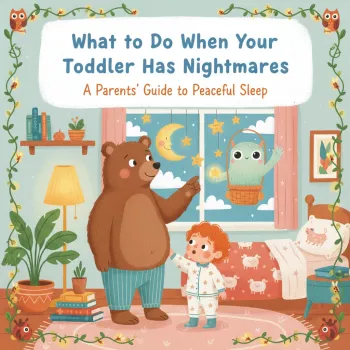
For caregivers who prefer a structured plan, What to Do When Your Toddler Has Nightmares (ebook guide) is designed as a step-by-step reference with calming scripts, routine ideas, and simple adjustments that support more settled nights.
Comfort tools that can support the routine (optional)
- A dedicated “sleep buddy” can give your child something consistent to hug while you guide two slow breaths. Consider Fluffy Fox plush toy for a dedicated sleep buddy.
- A small sip of water can help reset after crying; keeping a simple cup nearby reduces nighttime wandering. The Silicone training cup with handles for a small bedside sip can work well for quick, low-drama hydration.
FAQ
Should a toddler sleep in the parents’ bed after a nightmare?
A brief cuddle for regulation is fine, but returning your toddler to their own bed with a predictable routine tends to reduce repeat wake-ups over time. If your bed becomes the default solution, your child may start waking more often to seek it; a clear check-in promise can feel reassuring without changing the sleep location.
What if the same nightmare happens over and over?
Look for patterns like overtiredness, intense media, stress, or illness, then tighten the bedtime schedule consistently for 1–2 weeks. During the day, practice coping by drawing a new (silly or brave) ending and rehearsing a simple “brave plan”; if it continues with significant anxiety or sleep breathing concerns, talk with a pediatrician.
Does a night light help with nightmares?
It can help some toddlers feel oriented and less afraid, especially if they wake and feel disoriented in a dark room. Keep it dim and warm-toned; if your child becomes more alert or starts playing, switch to a lower setting or use a hallway light instead.










Leave a comment